Unlike a purchase made entirely with personal funds, this type of transaction is influenced not only by the agreement between the buyer and the seller, but also by the bank’s lending policy, the property valuation, the stability of the buyer’s income, existing liabilities and insurance requirements.

Buyer’s Guide · Latvia
How to Buy Property in Latvia:
purchase financing models
and a safe transaction structure
A guide to the main real estate purchase financing models in Latvia — buying with own funds, using mortgage financing, an escrow account, purchasing a mortgaged property, rent-to-buy structures and deferred payment. RELIVE explains how to structure a property transaction safely and understand the key financial risks.
From the outside, a purchase may seem simple:
choose a property, agree on the price and sign the agreement.
In practice, every scenario is different.
One buyer pays from personal savings, another uses mortgage financing in Latvia, while a third buys from abroad and chooses an escrow account. If the property is mortgaged, the seller’s bank also becomes involved in the process. If a legal entity or a foreign client participates in the transaction, AML checks and source-of-funds documentation become especially important.
RELIVE’s approach to these transactions is calm and structured: first, understand the legal and financial position of the property, then choose the appropriate transaction model. The goal is an informed and safe decision where potential risks are reviewed in advance, assessed and, together with RELIVE, either resolved or clearly managed.
A good real estate transaction is not defined by speed alone.
A good transaction is defined by a clear sequence, verified information
and the confidence that each party understands what is happening with the money, the property and the documents.
RELIVE — Premium Property Advisory
Who this guide is for
Practical guidance for buyers
who want to understand the process.
This article is intended for anyone considering the purchase of real estate in Latvia — whether the transaction is financed with own funds, mortgage financing or as a foreign buyer.
Riga & City
For buyers planning to purchase an apartment in Riga Centre, Teika, Āgenskalns, Mežaparks or another part of the city.
Greater Riga & Houses
For families considering the purchase of a house in Mārupe, Piņķi, Babīte, Berģi, Garkalne or Baltezers.
Mortgage financing
For buyers using bank financing who want to understand the role of the down payment, valuation and bank requirements.
Foreign buyers
For international clients buying real estate in Latvia who want a clear process in English, Latvian or Russian.
Investors
For investors assessing property as a long-term asset who want to reduce legal, financial and AML risks before starting the transaction.
01
First transaction model
Buying property
with own funds
The simplest model from a financing perspective — the buyer pays the full purchase price from personal savings, company funds, inheritance or another verifiable source. However, “without a loan” does not mean “without risk”.
This model is often used when buying an apartment in Riga, an investment property for rental, a land plot in Greater Riga or a house in Jūrmala. The transaction may move faster, which is exactly why legal due diligence before signing the earnest money agreement is especially important.
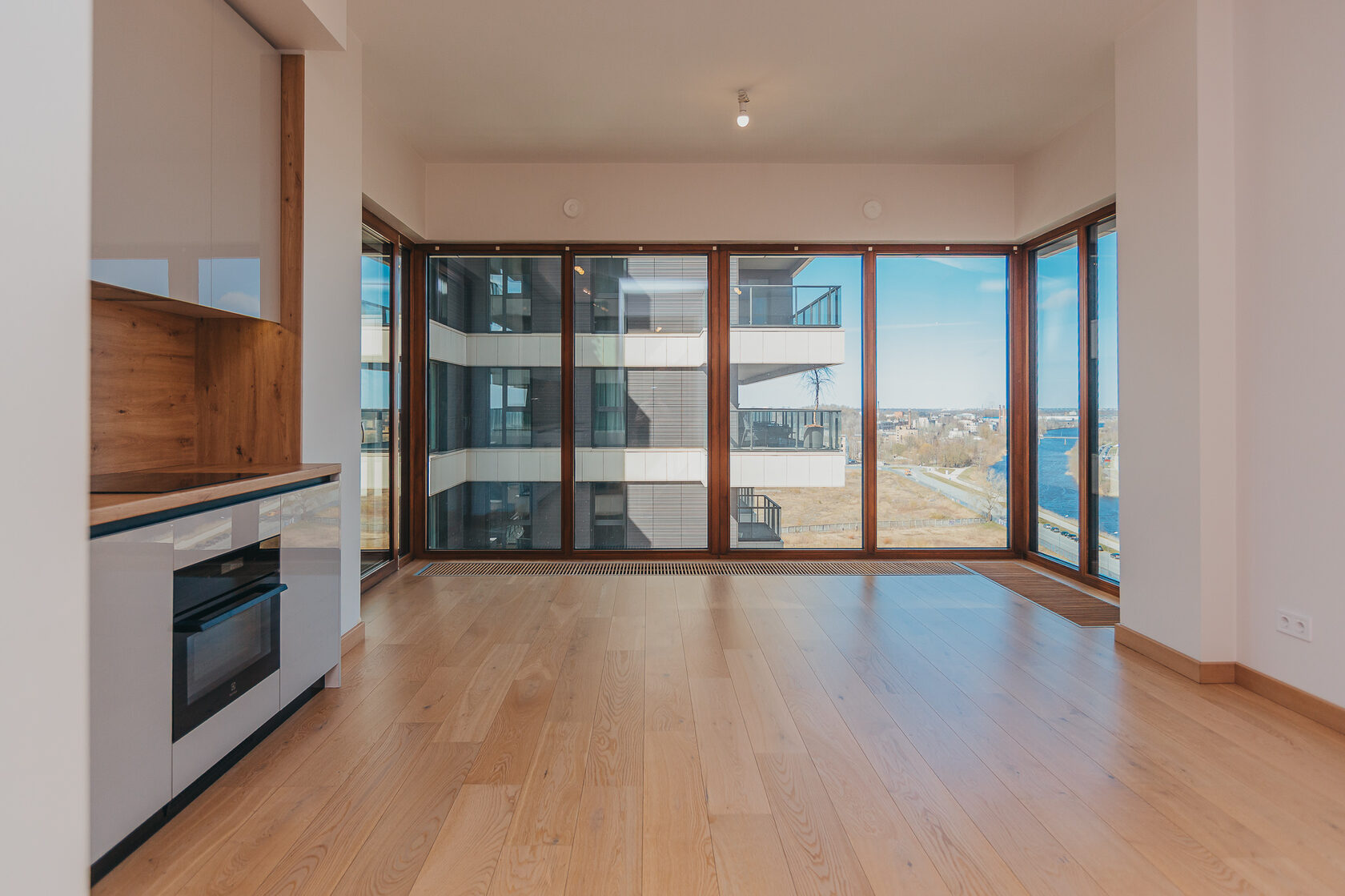
Filozofu Rezidence · Riga · Photo: Māris Lazdāns
Transaction flow
How a self-financed
transaction usually works
1
Land Register due diligence
The buyer or the buyer’s representative checks the property in the Land Register — ownership rights, mortgages, encumbrances, annotations and rights of use.
2
Cadastral information
Cadastral information, area, property composition, land status and, where applicable, construction documentation are reviewed.
3
Earnest Money Agreement
The parties sign an earnest money agreement setting out the initial payment, total price, deadlines and the key transaction conditions.
4
Purchase Agreement and notary
A real estate purchase agreement is prepared. The notary prepares and certifies the registration request, which is then submitted to the Land Register.
5
Payment
The buyer transfers the remaining purchase price before ownership is registered — either directly to the seller or through an escrow account.
6
Registration in the Land Register
Once ownership has been registered, the buyer becomes the legally recognised owner. The transaction is complete.
RELIVE recommendation
Is an escrow account necessary
when the buyer pays independently?
Formally, an escrow account is not mandatory in every transaction. In practice, for larger transactions — especially in Riga, Jūrmala and Mārupe — it is one of the safest solutions. An escrow account protects both parties: the buyer does not transfer funds directly to the seller before registration, while the seller sees that the funds are reserved for the specific transaction.
In transactions above EUR 50,000, in cases involving foreign buyers or where the parties do not know each other, an escrow account is not a formality. It is a practical security mechanism.
What an escrow account provides
- The buyer does not transfer money directly to the seller before ownership is registered in the Land Register.
- The seller receives confirmation that the funds are reserved and available for the specific transaction.
- The bank releases the funds only once the preconditions set out in the agreement have been fulfilled — a neutral and legally secure mechanism.
- If the transaction stops before ownership is registered in the Land Register, the procedure for returning the deposited funds is clearly defined.
Source of funds & compliance
AML checks —
even without mortgage financing
An important nuance: even if the buyer does not use bank financing, AML checks are carried out in a real estate transaction in Latvia. This is especially relevant for large transactions, foreign buyers, legal entities and situations where the funds come from multiple sources.
Bank statements
Bank statements for 3–12 months confirming the accumulation or receipt of funds in line with the declared source.
Proof of income
Payslips, State Revenue Service statements, company profit and loss statements or other documents confirming income.
Inheritance or gift
A certificate of inheritance or gift agreement together with bank statements confirming receipt of the funds.
Previously sold property
The purchase and sale agreement for the previous transaction and payment confirmation showing the movement of funds.
Dividends or investments
Company decisions on profit distribution, dividend payment confirmations or investment portfolio statements.
Prepare early
It is advisable to prepare the documents before starting the transaction — this reduces the risk of the process stopping after both parties have already agreed on the price.
02
Second transaction model
Property purchase
with a mortgage loan
Buying property with a mortgage loan is one of the most common ways to purchase a primary home in Latvia — an apartment in Riga, a new development in Pierīga, a house in Mārupe or a family property in another location. In this model, the bank finances part of the purchase price, while the buyer pays the down payment from their own funds.
Transaction process
How a mortgage transaction works
1
Preliminary loan assessment
The buyer chooses a property and receives a preliminary loan assessment from the bank.
2
Independent property valuation
A certified appraiser prepares an independent property valuation. The bank uses it to determine the maximum financing amount.
3
Final loan approval
The bank approves the final loan based on the valuation, the buyer’s income and the quality of the property.
4
Purchase agreement and escrow account
The purchase agreement is prepared and, if required, an escrow account agreement is also prepared.
5
Notary and registration request
A notary appointment is arranged and the Land Register registration request is signed.
6
Down payment and Land Register
The buyer pays the down payment and submits the payment order to the Land Register.
7
Release of funds
After ownership is registered in the Land Register, the funds are released to the seller and the bank transfers the loan amount according to the transaction structure.
8
Mortgage registration
A mortgage in favour of the bank is registered on the purchased property.
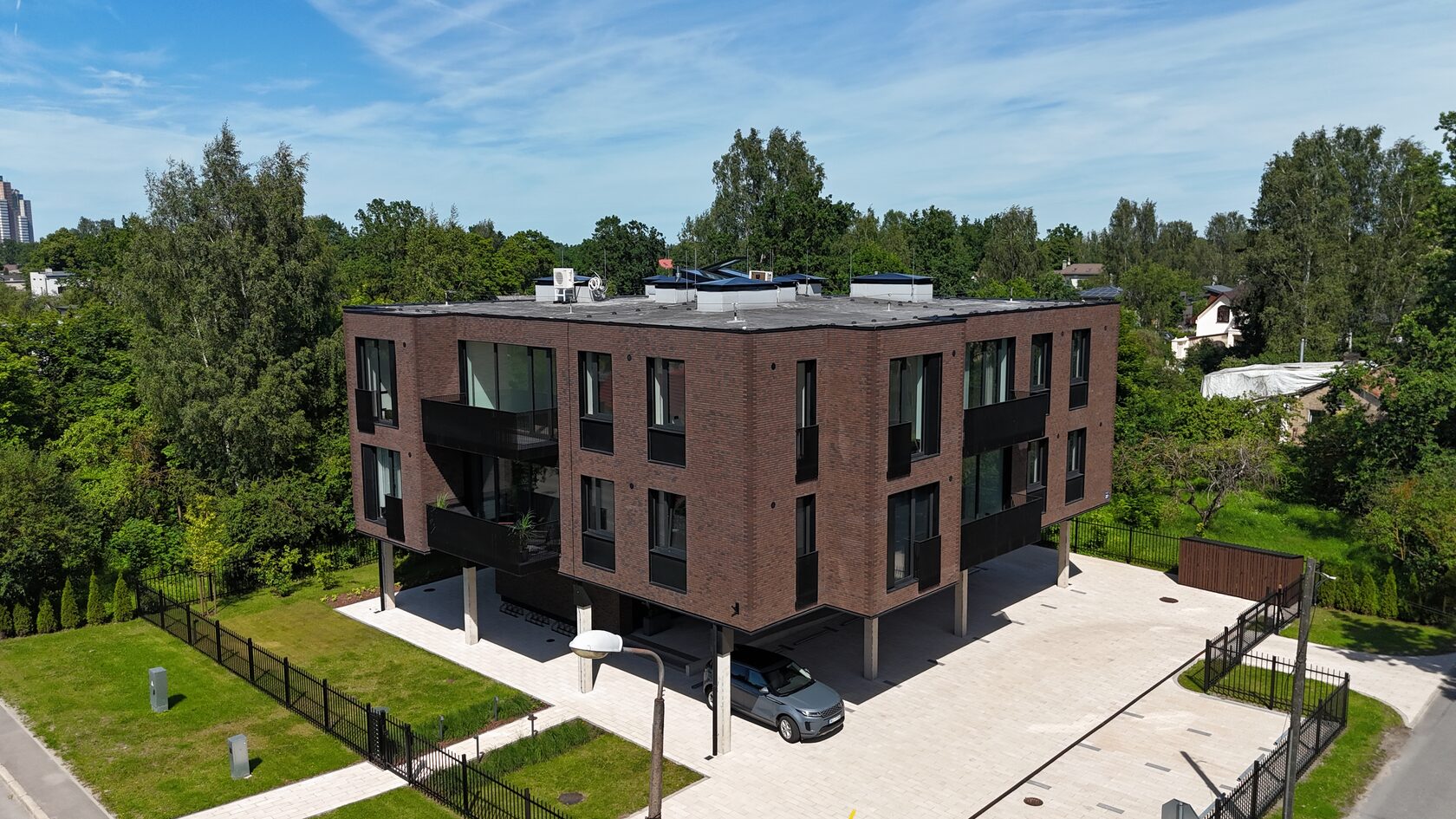
New development in Riga · Photo: RELIVE
Valuation risk
Down payment and the role of valuation
In Latvia, banks usually finance part of the property purchase price or the certified valuation — depending on which amount is lower. That is why the buyer needs to understand not only the listing price, but also the real market value.
This is especially important in Riga city centre, Jūrmala, Mārupe and other locations where a good property may be emotionally attractive, while the bank looks at comparable transactions and the quality of the collateral.
RELIVE in practice
If the valuation is lower than the purchase price, the buyer must cover the difference from their own funds. This often surprises buyers who reserve a property before the bank’s final assessment. RELIVE helps identify this risk earlier — before the decision becomes expensive.
Full transaction mathematics
Additional costs
for a mortgage purchase
When planning to buy a property with a loan, the buyer should account not only for the down payment, but also for transaction costs. The exact amounts depend on the bank, property price, notary, appraiser and transaction complexity — and should always be checked for the specific situation.
Important context for foreign buyers
This section is primarily intended for foreign buyers who already live in Latvia, have stable employment or income in Latvia, and have an active Latvian bank account or local banking history.
If you would like to purchase property in Latvia but do not yet have employment, income history, or a bank account in Latvia, a different set of financing, banking, AML and transaction requirements may apply. In such cases, RELIVE can clarify the applicable options and requirements upon request.
If you would like to purchase property in Latvia but do not yet have employment, income history, or a bank account in Latvia, a different set of financing, banking, AML and transaction requirements may apply. In such cases, RELIVE can clarify the applicable options and requirements upon request.
Certified property valuation
An independent appraiser required by the bank before loan approval.
~150–500 EUR + VAT
Bank commission
A fee for issuing the loan — usually a percentage of the loan amount.
% of the loan
Mortgage registration
State fee for registering the mortgage in the Land Register in favour of the bank.
According to the rate
State fee
Fee for registering ownership rights in the Land Register — different for individuals and legal entities.
1.5% / 2%
Notary costs
Notarial certification and preparation of the registration request, depending on transaction complexity.
~100–300 EUR
Property insurance
The bank usually requires insurance throughout the loan term.
Annually
Escrow account
Opening or servicing fee if an escrow account is used.
Depends on the bank
Life / unemployment insurance
If recommended or required by the bank for a specific financing model.
Depends on the model
Example — transaction mathematics
When buying an apartment for 120,000 EUR with a mortgage loan and a 15–20% down payment, the buyer should account for several transaction costs in addition to the down payment — together, these may amount to several thousand euros.
Therefore, the purchase budget should not be planned as “property price + down payment”, but as full transaction mathematics: down payment, state fee, chancery fee, Land Register costs, notary costs, as well as bank, valuation and other costs related to the parties involved in the transaction.
Therefore, the purchase budget should not be planned as “property price + down payment”, but as full transaction mathematics: down payment, state fee, chancery fee, Land Register costs, notary costs, as well as bank, valuation and other costs related to the parties involved in the transaction.
ALTUM support
State-supported purchase — down payment from 5%
If the purchase is made with ALTUM support, the down payment in certain cases may start from 5%. The state fee and conditions differ depending on the property value.
State fee if the property value is up to 100,000 EUR
0.5%
State fee if the value exceeds 100,000 EUR
500 EUR + 1.5%
Standard fee — individual
1.5%
Standard fee — legal entity
2.0%
Chancery fee
38 EUR
Fee for Land Register information
8 EUR
Before reserving a property with a mortgage loan, make sure that the price, bank valuation, down payment and additional costs form safe transaction mathematics. RELIVE helps assess the property, bank financing risks and purchase structure before the reservation agreement is signed.
Book a consultation 03
Third transaction model
Property purchase
with an escrow account
An escrow account is one of the most important security instruments in real estate transactions in Latvia. It is used when buying an apartment in Riga, purchasing a house in Pierīga, or structuring larger investment transactions where the buyer and the seller want a neutral mechanism for holding the funds.
An escrow account is opened by the bank for a specific purchase. The buyer’s money is paid into the account, but it is not released to the seller until the conditions set out in the agreement have been fulfilled — usually the registration of ownership rights in the Land Register in the buyer’s name and, if necessary, the deletion of mortgages or other encumbrances.
Suitable cases
When an escrow account is especially suitable
When the purchase amount is significant and the parties want clear security.
When the buyer and the seller do not know each other.
When the property is purchased by a foreign buyer with a bank account in another country.
When a legal entity or several owners are involved in the transaction.
When the property is mortgaged and the seller’s loan must be repaid from the purchase funds.
When the purchase is made without a mortgage loan, but the buyer wants a professional security mechanism.
Additional costs
Costs when using an escrow account
In Latvian banks, escrow account terms, fees and document requirements may differ.
Account opening and servicing
Escrow account opening and servicing fee — depending on the bank and transaction amount.
AML and KYC checks
Additional documents on the source of funds and the transaction parties may be required — especially for foreign clients.
Legal documents
Preparation of legal documents — especially if the transaction includes non-standard conditions.
Notary costs
Notary costs and preparation of the registration request.
Translations and certifications
Translations or document certifications if foreign parties are involved in the transaction.
Bank comparison
Before signing the agreement, it is worth comparing bank terms and confirming that the timing is suitable.
In Latvian banks, escrow account terms, fees and document requirements may differ. Therefore, before signing the agreement, it is worth comparing bank terms and making sure that the chosen account mechanism fits the transaction timeline.
04
Fourth transaction model
Property purchase
when the property is mortgaged
A property with an existing mortgage is a very common situation in Latvia. It is not an obstacle to the transaction, but it means that one more important stage must be added to the purchase structure — repayment of the seller’s existing loan and deletion of the mortgage from the Land Register.
These transactions often occur when selling apartments in Riga, family houses in Pierīga or properties in Jūrmala that were previously purchased with bank financing. For the buyer, it is important to understand the outstanding loan amount, which bank holds it and exactly how the mortgage will be deleted.
Two scenarios
Same-bank transaction versus an interbank transaction
Simpler scenario
Transaction within one bank
1
The purchase funds are paid into an escrow account or reserved according to the bank’s procedure.
2
The bank uses the transaction amount to repay the seller’s remaining loan obligations.
3
The buyer’s ownership rights are registered in the Land Register.
4
The existing mortgage is deleted and the pledge is removed from the Land Register.
5
A new mortgage in favour of the buyer’s bank is registered on the property.
6
The remaining amount is paid to the seller.
More complex scenario
Interbank transaction
1
The buyer’s bank approves the financing and sets the conditions for disbursing the funds.
2
The seller’s bank prepares information on the outstanding loan amount and the procedure for deleting the mortgage.
3
The escrow account mechanism determines how part of the funds is directed to repay the seller’s loan.
4
The buyer makes the down payment according to the transaction terms.
5
The buyer’s ownership rights and the new mortgage are registered in the Land Register.
6
The seller’s bank deletes the mortgage and issues the required documents.
7
The buyer’s bank disburses the funds and places a mortgage on the property in favour of the buyer’s bank.
8
The remaining part of the purchase price is paid to the seller.
RELIVE in practice
In these transactions, the most important element is not only document preparation, but also timeline coordination. If one bank delays approval or a document is not ready, the transaction may shift by weeks. A same-bank transaction is usually faster because two different banks do not have to be coordinated. However, even here a precise agreement, correct deadlines and readiness of all parties’ documents are required.
RELIVE consultation
An escrow account is not just
a bank formality — it is a security mechanism
An escrow account determines when and under what conditions the money reaches the seller. RELIVE helps assess whether an escrow account is needed in a specific transaction, how to structure the flow of funds and how to prepare AML/KYC documents in advance, so that the property purchase proceeds safely and without unnecessary delays.
05
Fifth Transaction Model
Buying Property Through Lease-to-Own
or Deferred Payment
Lease-to-own transactions in Latvia are not as standardized as purchases with a mortgage or purchases with own funds. They can be useful in situations where the buyer needs time to arrange financing, where the seller is willing to offer more flexible terms, or where the property is sold within a development project with a staged payment schedule.
These models may appear in new-build projects in Riga and the Riga region, land plot transactions, or individual agreements between private parties. They can be practical, but they require a particularly precise contract and legal protection in the Land Register.
I
Rent with Purchase Option
The buyer initially uses the property as a tenant, while part of the payments or a pre-agreed amount is credited toward the purchase price. After a defined term or once a certain amount has been reached, the buyer has the right to purchase the property.
II
Purchase by Instalments
The buyer and seller agree on a partial payment upfront and payment of the remaining amount according to defined deadlines. Transfer of ownership may take place only after the full amount has been paid or at another moment specified in the contract.
III
Deferred Payment
The buyer pays part of the purchase price upfront and the balance after a defined period — for example, after selling another property, receiving an inheritance, or a company dividend payment. This may help the buyer avoid missing a suitable property, but it increases the seller’s risk.
Risks and Protection
What to Know About Each Model
Buyer’s Advantage — Lease-to-Own
The opportunity to use the property immediately while arranging financing in parallel.
Buyer’s Risk — Lease-to-Own
If the seller becomes insolvent, dies, or changes their position, the buyer’s rights may be difficult to protect without a Land Register notation.
Seller’s Risk — Instalments
The buyer may stop making payments — the contract must clearly define the consequences, deadlines, and termination procedure.
Protection for Both Parties
The key is to protect the buyer from the risk that the property is sold to someone else, and to protect the seller from non-payment. It is advisable to register a notation in the Land Register.
The Role of a Lawyer
In lease-to-own, instalment, and deferred-payment transactions, legal involvement is not an “extra comfort”. It is a fundamental part of transaction security.
Source of Funds & Identity
AML Review and Source
of Funds Verification
of Funds Verification
AML review is an integral part of every real estate transaction. It includes checks of both transaction parties — the seller and the buyer — as well as the financing structure and the origin of the funds.
If RELIVE represents the seller and markets the property, the seller’s review is carried out at the beginning of the cooperation. Once a buyer is found for the property, the buyer’s review is also initiated.
Information prepared in advance helps move the transaction forward faster and more safely, with a lower risk of delays at the closing stage.
Who Performs the AML Review
— Real estate agency — as a subject of AML law, customer due diligence for both parties
— Notaries — identity and document checks when certifying the registration request
— Banks — opening escrow accounts, granting mortgage loans, processing payments
— Other service providers involved in the transaction — where necessary
What Is Checked and Which Documents May Be Required
What Is Usually Checked
—The buyer’s and seller’s identity and document validity
—The beneficial owner if a legal entity is involved in the transaction
—The source of funds — salary, business income, savings, dividends, inheritance, a loan, or previously sold property
—Politically Exposed Person (PEP) status
—Sanctions lists and jurisdictional risks related to the transaction
Which Documents May Be Required
—Bank account statements for the last 6–12 months
—Employment contract, payslips, or tax declarations
—Company financial documents or dividend resolutions
—Purchase agreement and Land Register extract if the funds come from the sale of another property
—Inheritance, gift, or loan documents
—Translations and certifications of foreign documents if the buyer is not a Latvian resident
Important
A failed or incomplete AML review does not mean that the buyer has done anything wrong. Often, the reason is insufficient documentation or an unclear explanation of the flow of funds. However, the practical result can be serious — the bank may refuse to open an escrow account, decline the loan, or stop the payment.
Section Seven
The Role of Each
Transaction Party
A safe real estate transaction in Latvia is a team effort. The buyer does not need to know every legal nuance, but should understand what each involved party does and at which point their role becomes critical.
The state register where ownership rights, mortgages, and other material encumbrances are registered. Only after ownership is registered in the Land Register does the buyer become the legally recognized owner. This is why checking the Land Register is the first step in any property purchase in Latvia.
Cadastre data helps clarify the property’s area, composition, permitted use, cadastral value, and technical information. When buying an apartment in Riga, this may seem formal, but for a house, land plot, or commercial property, cadastre information often reveals important details.
The notary certifies the registration request and helps ensure that the documents are prepared in line with Land Register requirements.
In a mortgage transaction, the bank is the lender. In an escrow-account transaction, it is a neutral third party that holds the funds and releases them once the contract conditions have been met. The bank also carries out AML checks and assesses the buyer’s solvency, the property value, and the quality of the collateral.
Determines the property’s market value based on its condition, location, comparable transactions, infrastructure, and market situation. This valuation is critical in mortgage transactions and especially important in locations where prices can vary significantly even within the same neighborhood.
Legal involvement is especially important in complex transactions — lease-to-own models, interbank transactions, mortgaged properties, and cases involving foreign buyers. Legal consultation before signing a reservation agreement is a preventive step, not a reactive one.
The advisor’s role is not only to show the property or share contacts. From RELIVE’s perspective, a good advisor helps the buyer understand the transaction structure, checks the risks, coordinates the banks, notary, appraiser, and lawyer, and keeps the transaction logic clear from the first decision to the handover of the property.
Section Eight
How to Safely Structure a
Real Estate Transaction in Latvia
Whether you are buying an apartment in Riga, a house in Jurmala, a land plot in the Riga region, or an investment property in Latvia, a safe transaction starts with the right sequence. When the sequence is wrong, even a good property can create unnecessary risk.
1
Land Register and Cadastre — Before Anything Else
Before paying a reservation deposit, check the Land Register, cadastre data, encumbrances, and the composition of the property.
2
Financing Model
Clarify the financing model — own funds, mortgage loan, escrow account, lease-to-own, or a combined solution.
3
AML Documentation — In Advance
Prepare AML and source-of-funds documents before the bank asks for them, not afterwards.
4
Mortgage and Encumbrance Check
Check whether the property is mortgaged and understand which bank holds the seller’s mortgage.
5
Reservation Agreement with Clear Terms
Include clear deadlines, reservation-deposit terms, and liability if the transaction does not proceed.
6
Precision in the Purchase Agreement
In the purchase agreement, precisely define the payment procedure, handover date, property condition, equipment, and closing of utility payments.
7
Unified Transaction Timeline
Coordinate the bank, notary, appraiser, and document deadlines in one timeline.
8
After Registration in the Land Register
After registration in the Land Register, arrange insurance, utility contracts, property manager information, and the property handover deed.
Before the buyer says “yes”, it must be clear not only what they are buying, but also exactly how the transaction will happen. A good property without a clear process can still be a weak decision.
The RELIVE Approach
Frequently Asked Questions
Questions About
Buying Real Estate
Can property in Latvia be bought without a bank loan?
Yes. A buyer can purchase real estate in Latvia with their own funds by making a bank transfer. However, in larger transactions it is advisable to use an escrow account to protect both the buyer and the seller.
Is an escrow account mandatory?
An escrow account is not mandatory in all cases, but it is highly recommended if the transaction amount is significant, the property is mortgaged, the buyer is a foreign client, or the parties want a safe and transparent mechanism for the flow of funds.
Can you buy a property if it has a mortgage?
Yes. This is a common scenario in Latvia. The purchase funds may be used to repay the seller’s existing loan. The key is to correctly coordinate the banks, escrow account, mortgage release, and registration in the Land Register.
Why does the bank require AML documents?
The bank requests AML documents to verify the identity of the transaction parties and the lawful origin of the funds. Real estate transactions are large financial transactions, so source-of-funds checks are a normal part of the process.
How long does a real estate transaction in Latvia take?
A simple transaction with own funds and well-prepared documents can move relatively quickly. A mortgage transaction or an interbank transaction involving a mortgaged property usually takes longer because banks, an appraiser, a notary, and the Land Register are involved. Practical timelines should be planned individually for each transaction.
Can a foreigner buy property in Latvia?
Yes, foreign buyers can purchase real estate in Latvia, although in certain cases restrictions may apply, for example in relation to agricultural land or the status of a transaction party. Foreign buyers should usually expect a more detailed AML review and document translations.
Can buying property in Latvia be linked to a residence permit?
In certain cases, buying real estate in Latvia may be linked to a residence permit or Golden Visa process, if the transaction meets the applicable requirements. In such cases, particularly careful legal review and cooperation with an immigration law specialist are required.
In Closing
A Good Property Transaction
Starts with a Clear Structure
Buying real estate in Latvia is not just signing a contract. It is a process that brings together property due diligence, financing, the Land Register, bank requirements, AML documents, the purchase agreement, and the practical handover of the property.
The buyer does not need to know everything on their own. But the buyer should have a team alongside them that sees the full picture, asks precise questions, and prevents the transaction from becoming chaotic.
RELIVE helps buyers in Latvia — in Riga, Jurmala, Marupe, the Riga region, and other locations — understand the transaction structure, choose the safest solution, prepare the documentation, and make decisions with confidence.
We are your property advisors — from the first question to the final signature.
Note: this material is informative and does not replace individual legal or financial advice. The terms of a specific transaction must always be assessed based on the property documents, bank requirements, and the applicable regulation.
Book a Property Purchase Consultation
Receive a consultation on the most suitable property purchase financing model in Latvia — purchase with own funds, mortgage loan, escrow account, acquisition of an encumbered property, buyout option, or deferred payment.
